“THIS IS NOT INSPIRATION, IT IS PLAGIARISM”: American Creator Crystal Nicole Calls Out Nollywood Star Uche Montana Over Sponsored Ad Copying
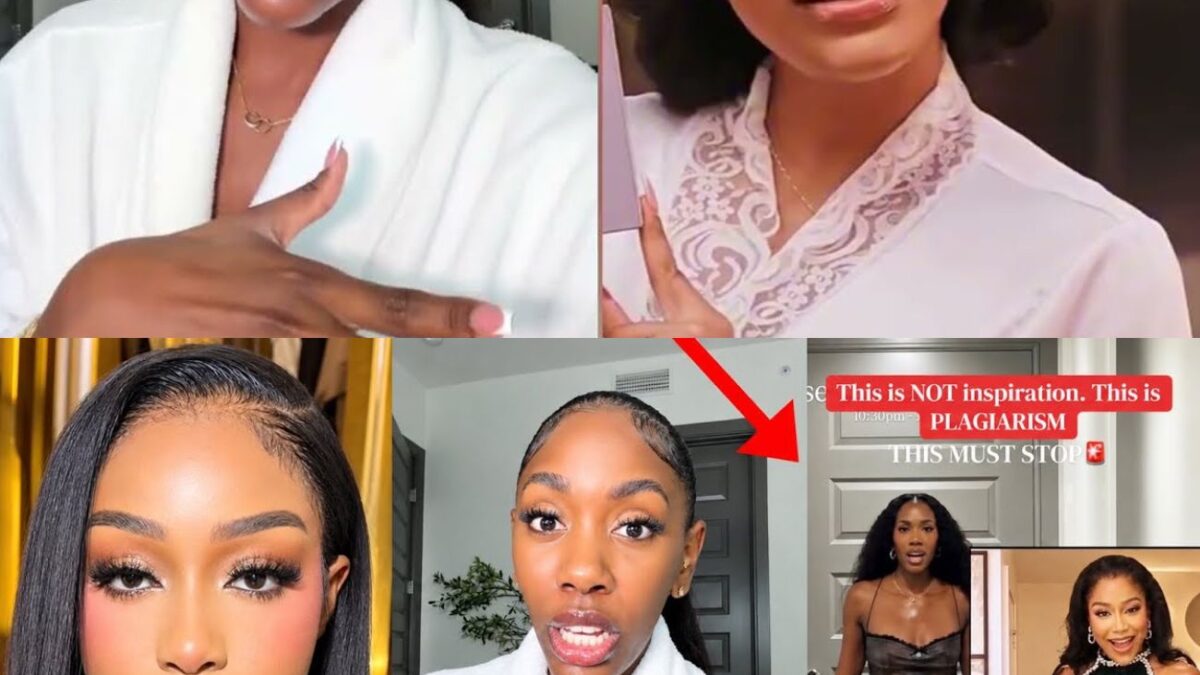
The line between creative inspiration and blatant intellectual theft is frequently tested on social media, but a recent trans-Atlantic clash between two prominent Black female creators has escalated into a public feud. The dispute involves American lifestyle influencer Crystal Nicole and celebrated Nigerian actress Uche Montana (formerly Uche Nwaefuna).
The controversy began when Crystal took to Instagram to issue a direct, pointed callout. Her accusation was that Uche copied one of her signature evening unwind videos almost script-for-script and gesture-for-gesture, subsequently selling the concept as a paid promotional partnership for a wine brand without permission or attribution.
The conflict quickly spread beyond individual accounts, sparking intense online discussions across Nollywood fan communities, the American creator sphere, and legal commentary circles.
The Video Evidence: An Uncanny Mirror
The issue surfaced when side-by-side comparison clips of the two videos began circulating across Instagram, TikTok, and YouTube.
In Crystal Nicole’s original production—a staple format of her evening self-care routine—she walks into her home, sighs dramatically, and addresses her camera audience with an intimate greeting:
“Oh my God, what a night. Now, who let you in? Well, since you’re here, do you want to unwind together?”
She then commands her smart assistant (“Hey Siri, play wind-down playlist”), lights candles, pours a drink, and delivers the line: “Cheers. Never too many candles. Thought I was strong when I stayed unbothered.”
In Uche Montana’s sponsored campaign, the structural progression appeared almost identical:
-
The Entrance: Uche enters on camera, sighs, and looks directly at the lens.
-
The Dialogue: “Now, who let you in? Okay, well, now that you’re here, would you like to unwind with me?”
-
The Smart Device Command: Crystal’s “Hey Siri, play wind-down playlist” became Uche’s “Alexa, chill playlist.”
-
The Candle Cliché: Crystal says “Never too many candles.” Uche responds with “There’s no such thing as too many candles.”
-
The Aesthetic Actions: The sequence of lighting wicks, pouring wine, and sinking into the couch mirrored Crystal’s pacing beat-for-beat.
For audiences viewing the side-by-side edit, the degree of similarity was difficult to ignore. The dispute was not merely over a general lifestyle concept like pouring wine after a long day; it centered on the exact cadence, sequence, staging, and comedic delivery.
“This Level of Plagiarism Is Alarming”: Crystal Nicole Speaks Out
Visibly frustrated, Crystal Nicole addressed her community to outline why the situation warranted public pushback.
“Now, I am not the one to get on the internet and ever do something like this because I do understand a lot of social media content is inspired by others,” Crystal stated in her opening remarks. “However, this is not inspiration. This is plagiarism. What you just saw was another content creator step-by-step regurgitating my content and creating it as if it is their own with absolutely no credit or recognition given.”
The core grievance centered on commercial monetization.
“And to make it even worse, this was for a paid partnership, come to find out. To use my words, my creative direction, my creative flow, word-for-word, and submit it to a brand as if you are the one that came up with it, and you get paid for it, is extremely alarming.”
Crystal noted that while other creators frequently borrow lifestyle formats, they typically reinterpret the concepts or add unique elements.
“I spend so much time coming up with creative ideas, creative concepts for my audience to enjoy. To see someone steal it with no credit, no accountability, no empathy, is extremely disheartening… If anyone is a content creator, you know how passionate we are about our craft because it takes so much for us, especially as a Black woman, to make our own lanes in this industry. And to see another Black woman take that recognition away from the original creator, and do it with no remorse, no empathy, no apology, is absolutely unreal.”
Private Messages, Edited Captions, and a Sudden Deletion
The controversy escalated when private communications between the two creators became part of the public exchange.
According to Crystal, Montana initially reached out via direct message, stating they should “handle this respectfully.”
Crystal took issue with that characterization, countering that calling out creative appropriation was not disrespectful; the disrespect lay in using another creator’s concept, pacing, and personality for a commercial contract.
Shortly afterward, Montana edited the caption of her sponsored post to include:
“Inspired by @KristinNicole.”
However, the edit was short-lived. Crystal noticed that Montana soon removed the active tag and simply typed out her name as plain text.
Unsatisfied, Crystal sent a detailed message explaining why a casual post-facto credit did not resolve the problem:
“Hi Uche, I appreciate you reaching out, but I want to be clear that ‘inspired by Crystal Nicole’ does not accurately reflect what happened here. Inspiration means taking an idea or creative direction and using it as a starting point to create something of your own. Your video didn’t simply take inspiration from mine. You copied my wording, flow, structure, and overall creative concept nearly word-for-word. That isn’t inspiration. That is plagiarism. And considering this content was also created for a paid partnership, simply adding ‘inspired by’ to the caption after being called out does not make this right.”
Faced with growing scrutiny in her comment sections, Montana chose not to drag out the dispute online. Rather than issuing a public clarification or entering an extended debate, she deleted the sponsored post entirely from her feed. Shortly thereafter, Crystal reported that she was either blocked or unable to view Montana’s profile.
Divided Online Reactions: Creative Theft vs. “Trend Culture”
The dispute quickly triggered a split in public reaction across social media.
The Pro-Crystal Stance
Supporters of Crystal Nicole argued that social media content should be treated as legitimate intellectual property. In an economy where independent creators invest extensive hours scripting, staging, lighting, and editing content, taking an entire sequence and reselling it to a corporate sponsor undermines that labor. Commentators pointed out that if an agency or production firm lifted another agency’s treatment for a commercial, it would prompt immediate legal backlash.
The Defense of Uche Montana
Conversely, supporters of the Nollywood actress offered several defenses:
-
The Creative Team Factor: Prominent screen personalities frequently rely on social media managers, creative directors, and ad agencies to script commercial content. Supporters argued that Montana may have been provided a concept board by a third-party producer without knowing its specific origin.
-
The Nature of Short-Form Video: Defenders argued that platforms like TikTok and Instagram thrive on viral formats, audio recycling, and mimicry. From this perspective, recreating popular reels is standard practice across digital entertainment.
-
The Script Differences: Some users argued that Montana substituted certain phrasing and altered minor details (such as switching from Siri to Alexa), arguing the video fell into the broader category of parody or re-enactment rather than direct copyright infringement.
The Broader Legal and Ethical Reckoning in the Creator Economy
The dispute highlights a recurring gray area within international social media marketing:
| Factor | Creative Inspiration / Trend Culture | Alleged Plagiarism / IP Infringement |
| Origin Point | Uses an idea as a loose foundation or springboard. | Copies specific scripting, staging, rhythm, and shot composition. |
| Execution | Adds significant individual perspective, variation, or cultural adaptation. | Recreates the original step-by-step with nominal cosmetic alterations. |
| Commercialization | Typically personal, organic, and non-commercial community engagement. | Packaged, pitched, and delivered as proprietary creative work for paid brand deals. |
| Attribution | Clear, upfront credit, tags, and recognition from the initial upload. | Concealed origin, followed by retroactively added or removed attribution under scrutiny. |
When organic content creators see their original staging adapted into commercial campaigns by high-profile personalities, the issue often moves beyond digital etiquette into questions of commercial ethics.
By removing the video, Montana appeared intent on containing the fallout. However, the controversy serves as a cautionary tale for modern influencers, agencies, and brands: in an interconnected digital space, borrowed concepts are quickly recognized, and audiences increasingly demand full accountability for original work.